

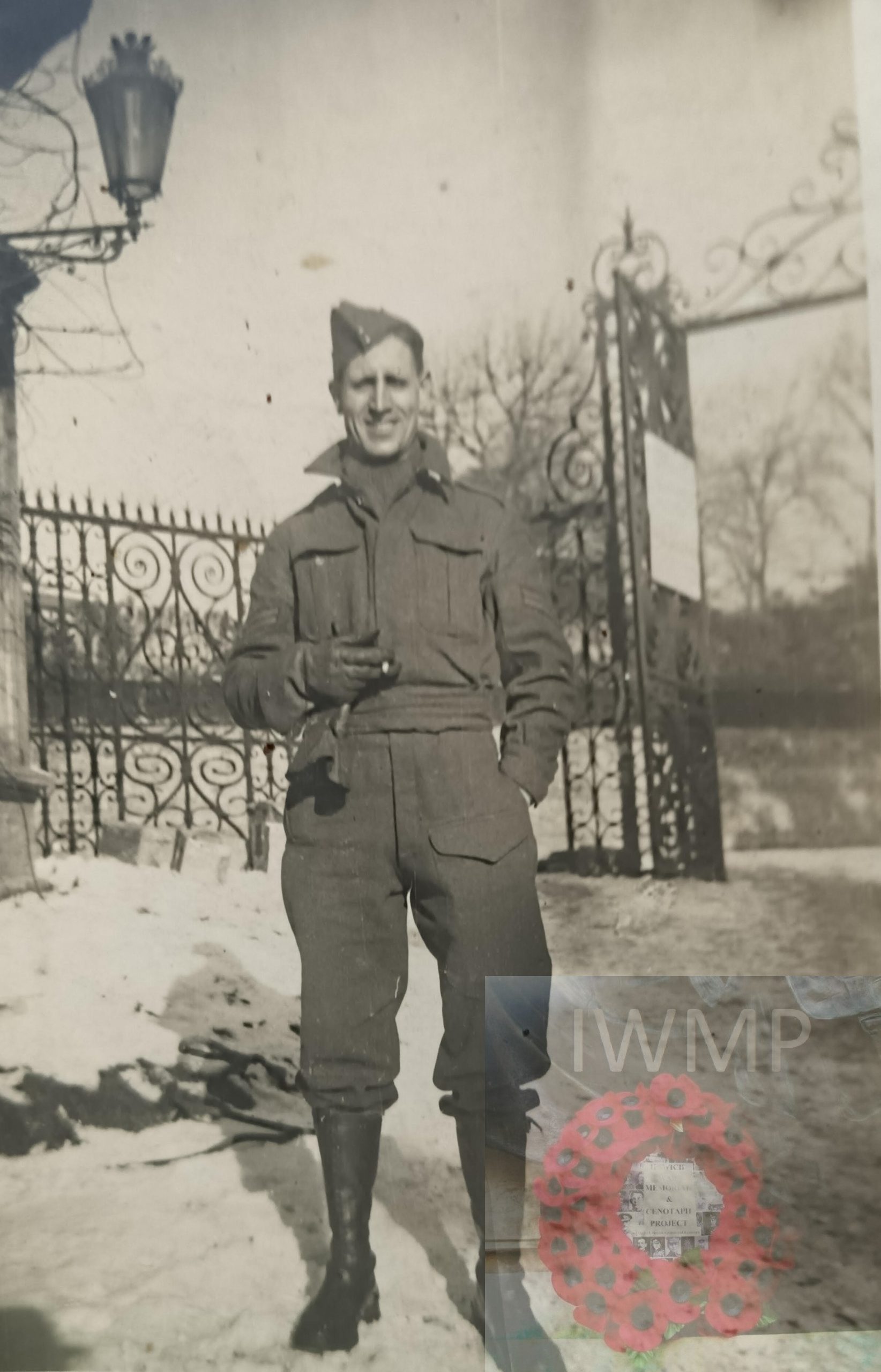
GORDON REGINALD JACK RUMSEY

From May through to September 2026, Andrew will be fulfilling his dream to hike the iconic Land’s End to John O’Groats! You are all warmly invited to follow Andrew’s epic journey on his Facebook page, “Andrew Beal LEJOG” https://www.facebook.com/profile.php?id=61577588795730
As Andrew hikes the 1,300+ miles, he will raise funds for the Ipswich War Memorial Project to help finance our future exhibitions and research of the brave Ipswich men and women who lost their lives in conflict. If you would like to make a small donation, please click on the link: https://gofund.me/5d4a50570
Thank you for your love and support. Andrew & Helen – I.W.M.P.
Image courtesy of Harry Rumsey.
Born: 1914, Ipswich.
Died: 21st September 1943; age: 29; Japanese POW – Thailand – Burma Railway.
Captured: 15th February 1942.
Residence: 6, Bloomfield Street, Ipswich.
Rank: Warrant Officer II (Company Sergeant Major); Service Number: T/57636;
Regiment: Royal Army Service Corps.
Grave Reference:
B1.M.1.
Thanbyusayat,
Burma.
Image courtesy of Kevin Knights.
Father: John Rumsey, born April 1876, Raydon, Suffolk. A Foreman – General Post Office.
Mother: Gertrude Mary Rumsey (nee Ramplin), born March 1942, Ipswich.
Probate to John Rumsey – Father, a retired Enineer – G.P.O.
The Fall of Singapore.
On the 15th of February 1942, Lt General Arthur Percival signed the largest surrender in British history at Singapore. The city was supposed to be a fortress, but his force of 85,000 men had been defeated by just 35,000 Japanese troops.
Little over 2 months earlier Japanese forces had invaded Northern Malaya. Thanks to their advanced tactics and training, the Japanese advanced with incredible speed pushing the unprepared British and commonwealth troops back to Singapore in a so-called ‘bicycle blitzkrieg’. When they crossed the Johore straights and captured the Bukit Timah heights above Singapore itself. a million civilians in the city were crammed into the remaining Island area held by Allied forces. Japanese aircraft continuously bombed the civilian water supply which was expected to fail within days.
Percival was forced to surrender, the order to surrender surprised the men.
49 infantry battalions, 85,000 British, Indian, Australian and local troops became prisoners of war, joining the 50,000 already captured in Malaya. many died of neglect, abuse or forced labour. During the next three years, over one-third of the men died in Japanese captivity.
Many Ipswich men were part of the Newly arrived 18th Infantry Division, with Battalions from the Suffolk Regiment, Royal Norfolk Regiment, Cambridgeshire Regiment, Royal Engineers and Royal Artillery.
One of the youngest British and Ipswich soldier to be killed during the battle, was Boy soldier James Martin of the 1st Battalion, Manchester Regiment. He was aged 16.
Leave a Reply