

FRANCIS JOHN BARHAM

Image courtesy of Kim Quinton (dated 1904 -1905)
Registered at birth – FRANCIS JOHN MARKHAM
Born: 20th December 1886, at Raniket, India.
Baptised on the 12th January 1887, at Nainital, Bengal, India.
Died: 28th September 1916; age 29; died as a Prisoner of War – Taurus Railway, Mesopotamia.
Residence: Christchurch Mansion, Ipswich.
Enlistment Location: Ipswich.
Date of Entry Therein: 16th November 1914 – Asia.
Rank: Corporal; Service Number: 6067
Regiment: Norfolk Regiment, 2nd Battalion.
Medals Awarded: Victory, British War & 1915 Star.
The body was exhumed from Tarsus Cemetery, Asia Minor, in the 1920s and reinterred at Baghdad North Gate Cemetery.
Grave Reference:
XXI.P.15
Baghdad (North Gate) War Cemetery,
Iraq.
Relatives Notified & Address: Second son of William Barham, of Christchurch Mansion, Ipswich.
CENSUS
1891 St. Botolph’s Barracks, Colchester, Essex.
Francis Barham was 3 years old and living with his mother, stepfather & siblings. The children were recorded as Barham.
William Barham, 32, a Colour Sergeant in the 2nd Battalion of the Norfolk Regiment, born Ipswich.
Ellen Barham (nee White), 27; born Ireland.
Ellen Markham Barham, 7, born Campus, Colchester, Essex.
(Gussie) Thomas Augustus Anthony Markham Barham, 5, born Morar, Gwalior, India.
1901 Christchurch Mansion, Ipswich.
Francis was 14 years old, a General Labourer. He was living with his parents, sister & stepbrothers.
William, 42, Caretaker of Christchurch Mansion.
Ellen, 38.
Ellen, 17.
Albert David Barham, 7, born Colchester.
Charles Barham, 3, born Kildare, Ireland.
William Arthur Barham, 1, born Ipswich.
1911 Ceylon & India.
Francis was 24 years of age, a Private and a Musician in the 2nd Battalion of the Norfolk Regiment.
Francis’ father, Thomas Arthur Markham, a Sergeant of the Norfolk Regiment, 2nd Battalion, was born in June 1858, Maidstone, Kent, and died very suddenly of cholera on the 1st September 1887, at Benares, Bengal, East Indies.
Francis’ mother, Ellen Barham, died suddenly on the 26th January 1914 at her home, Christchurch Mansion, Ipswich, and was buried at Section YY, Ipswich Old Cemetery.
Soldiers’ Effects to William Barham – father.
Francis is also remembered on the war memorial at St. Margaret’s Church, Ipswich and St. Pancras Catholic Church, Ipswich.
Francis’ father, William Barham, died in April 1928, at his home, Church Street, Eye, Suffolk and on the 28th April, after a funeral service at St. Peter and St. Paul’s Church, Eye, was buried at Eye Cemetery.
Suffolk Chronicle and Mercury – Friday, 4th May 1928 – EYE – The funeral of Mr. William Barham, of Church Street, Eye, who died suddenly last week, took place at Eye Cemetery on Saturday afternoon. William Barham was 69 years of age, was an ex-Quartermaster-sergeant of the 2nd Battalion, Norfolk Regiment, and had only resided at Eye for about six months, previous to which he had been caretaker of Christchurch Mansion, Ipswich. Mr. Guy Maynard, curator of Ipswich Museum, attended. Floral tributes, in addition to those from the family, included those from the Ipswich Museum Committee and the staff of Ipswich Museum and Christchurch Mansion.
THE NORFOLK REGIMENT, 2nd Battalion
The siege of Kut Al Amara (7 December 1915 – 29 April 1916), aka the First Battle of Kut.
2nd Battalion of the Norfolk Regiment serving in India as part of the 18th Indian Brigade of the 6th (Poona) Division at the outbreak of the War. Embarked for Mesopotamia from Bombay, landing at Sanniya on the 6th November 1914.
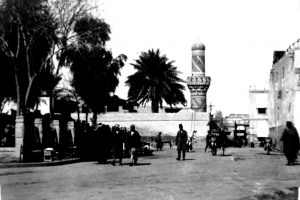
Following the advance towards Baghdad in 1915, using the Tigris River as the main route north, the Battalion made several contacts with the enemy before reaching the outskirts of Baghdad. The Campaign advance is 500+ miles from their base at Basra. The long supply chain was hampered by heat and extreme weather conditions. The British and Indian troops retreated to Kut on the 3rd December 1915 to regroup and consolidate following the first attack on Baghdad.
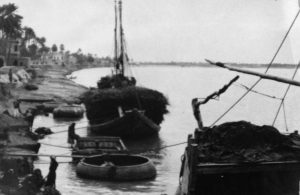 In the flat countryside at Kut, on a bend in the river, the troops dug in as Ottoman forces numbering around 11,000 moved down from the north. Making trenches and fortifications to protect the Town. The Turks made many attempts to take the British position, but soon reverted to sniping and bombardment of the town. Blockade and siege tactics were used in the hope of starving the defenders out. The British Army garrison had enough food for one month, but kept going for 147 days, forced to cut rations, and survived on horse meat and fish from the Tigris. The last four weeks of the siege saw starvation throughout the Battalion and the Army.
Attempts to relieve the town were made but were fought off by the Turks as they moved south, seeing a large-scale Battle at Sheikh Sa’ad, costing 20,000+ allied casualties. Attempts were made to negotiate a peaceful withdrawal from the Town, offering cash sums to the Turks. On the 29th April 191,6 facing starvation, the British surrendered to the Ottoman forces. 10,000 survivors of the siege were marched to Baghdad and paraded around the city. The British and Indian troops were later imprisoned at Aleppo. Two-thirds of the men were to die in captivity from disease and starvation.

The Siege of Kut Al Amara YOUTUBE documentary.
THE NORFOLK REGIMENT 2nd Battalion: http://www.longlongtrail.co.uk/army/regiments-and-corps/the-british-infantry-regiments-of-1914-1918/norfolk-regiment/
Leave a Reply